
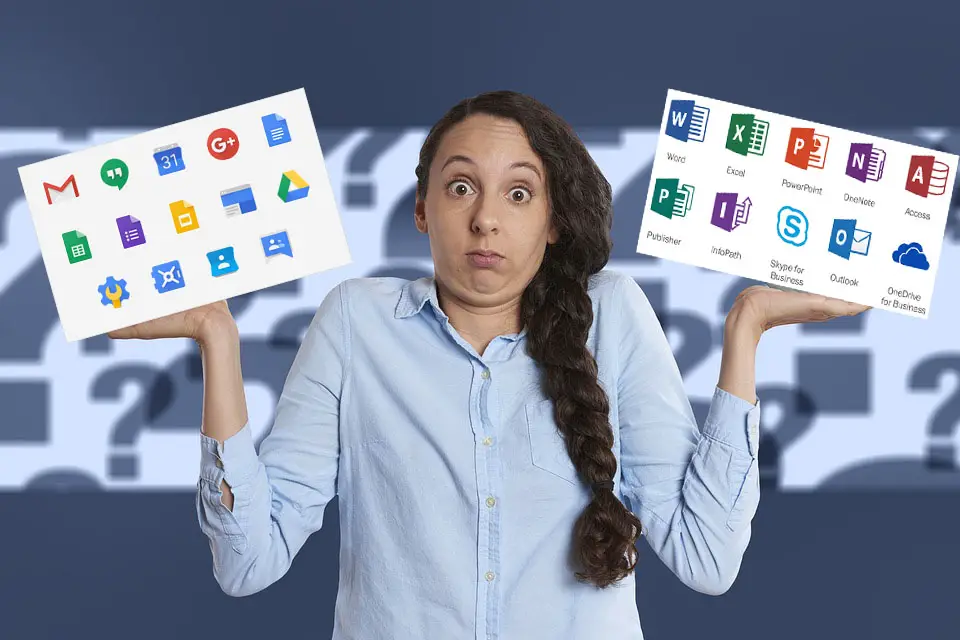
Most people and businesses use either Microsoft 365 (formerly Office 365) or Google Workspace (formerly G Suite) for their productivity needs. Both are mature, capable platforms — but they suit different types of users. Here’s a direct comparison to help you decide.
Short Answer: For most individuals and small teams who primarily work in a browser, Google Workspace is the better value. Microsoft 365 wins for businesses that rely on Excel power users, complex Word formatting, or on-premise integration — and for anyone who needs the full desktop app experience.
Pricing at a Glance (2026)
- Google Workspace: Business Starter $6/user/month (30GB storage, all core apps)
- Microsoft 365 Business Basic: $6/user/month (1TB OneDrive, web apps only)
- Microsoft 365 Business Standard: $12.50/user/month (full desktop apps + 1TB)
- Personal free tiers: Google (free with Google account, 15GB) vs Microsoft (free web apps with 5GB OneDrive)
Where Google Workspace Wins
Real-Time Collaboration
Google Docs, Sheets, and Slides pioneered browser-based real-time collaboration. Multiple users can edit simultaneously with changes appearing instantly. Microsoft 365 has caught up significantly, but Google still has an edge in raw collaboration fluidity.
Integration and Search
Gmail + Google Calendar + Google Drive + Google Meet is a seamless ecosystem. Google’s search across emails, files, and calendar is excellent. Everything syncs instantly.
Simplicity and Speed
Google apps load faster and have simpler interfaces. They work great on low-powered devices and slow connections.
Price
For individuals, Google Workspace is effectively free (personal Google account). Microsoft 365 personal costs $69.99/year for full desktop apps.
Where Microsoft 365 Wins
Excel
Microsoft Excel is still significantly more powerful than Google Sheets for complex financial modeling, Power Query, Power Pivot, and VBA macros. If your work is Excel-heavy, there’s no real alternative.
Word and PowerPoint
Complex Word documents with precise formatting, mail merge, and legal templates still work better in Word. PowerPoint has more advanced animation and presentation tools than Google Slides.
Desktop Apps
Microsoft 365 includes full desktop applications (Word, Excel, PowerPoint, Outlook) that work offline and handle larger files better than browser-based tools.
Enterprise Features
Microsoft Teams, SharePoint, and Azure AD integration make Microsoft 365 the default choice for large enterprises with existing Microsoft infrastructure.
Quick decision guide:
Student or individual doing general work → Google Workspace (free). Small team, browser-first workflow → Google Workspace Business Starter. Business with heavy Excel/Word needs or existing Microsoft infrastructure → Microsoft 365 Business Standard.
What About Free Options?
- Google (Free personal): Docs, Sheets, Slides with 15GB Google Drive — covers most individuals completely
- Microsoft (Free web): Office.com gives free access to web versions of Word, Excel, PowerPoint with 5GB OneDrive
- LibreOffice: Free, open-source desktop office suite — best offline alternative if you don’t want subscriptions
Warning: Free Microsoft account gives you the web versions of Office apps, not the full desktop versions. If you need desktop Excel with all features (Power Query, macros, advanced functions), you need a paid Microsoft 365 subscription.
Quick checklist:
- ✅ Individuals doing general work: use the free Google account — it’s sufficient
- ✅ Students: check if your school provides free Microsoft 365 or Google Workspace for Education
- ✅ Small teams: Google Workspace Business Starter ($6/user) is excellent value
- ✅ Excel power users: Microsoft 365 Business Standard is worth the premium
- ✅ Test both with free trials before committing to a paid plan
FAQ
Can I switch between Google Workspace and Microsoft 365?
Yes, but it requires migration work — moving emails, files, and contacts. Google Takeout exports your Google data. Microsoft 365 migration tools handle Exchange and SharePoint content. For small teams, it’s manageable. For enterprises, plan for weeks of migration work.
Is Google Workspace HIPAA compliant?
Yes — Google Workspace Business and Enterprise tiers are HIPAA compliant when configured correctly with a BAA (Business Associate Agreement) from Google. Microsoft 365 also supports HIPAA compliance.
Does Google Workspace work offline?
Yes — Google Docs, Sheets, and Slides support offline editing in Chrome. Enable offline mode in Google Drive settings. Changes sync automatically when you reconnect.
Google Workspace Tips ↗Best Productivity Apps
For most people and small businesses, the free Google account covers 90% of needs. If you’re going paid, both platforms are mature and the right choice depends almost entirely on whether Excel depth or collaboration simplicity matters more to your workflow.