
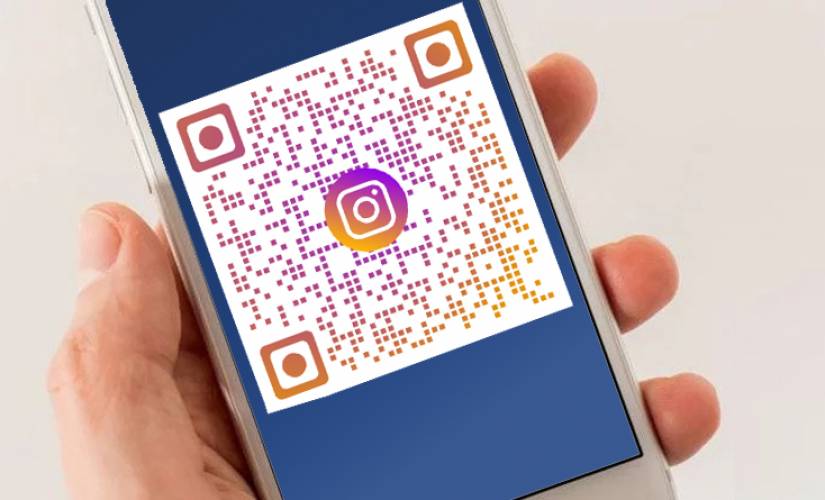
QR codes are everywhere — on restaurant menus, product packaging, business cards, boarding passes, and payment terminals. But most people just point their phone at them without knowing what they actually are or how they store information. Here’s a clear, non-technical explanation.
Short Answer: A QR code is a two-dimensional barcode that stores information (URLs, text, contact details, payment data) as a pattern of black and white squares. Smartphone cameras decode this pattern instantly using image recognition.
What Does QR Stand For?
QR stands for Quick Response. The format was invented in 1994 by a Japanese company called Denso Wave, originally to track automotive parts during manufacturing. It was designed to be scanned quickly even when partially damaged or viewed at an angle — which is why QR codes work even when they’re slightly torn, smudged, or printed on a curved surface.
How Does a QR Code Store Information?
A QR code is essentially a grid of black and white squares arranged in a specific pattern. Each square represents a binary value — black = 1, white = 0. The pattern encodes data using a format that includes:
- Finder patterns — the three large squares in three corners that tell your camera where the code starts and what orientation it’s in
- Alignment patterns — smaller squares that help the scanner correct for distortion
- Data modules — the bulk of the grid, encoding the actual content
- Error correction — redundant data that lets the code work even if up to 30% of it is obscured or damaged
📸 SCREENSHOT NEEDED: Diagram of a QR code with labeled sections: finder patterns (three corner squares), alignment pattern, timing pattern, and data modules
What Can a QR Code Contain?
QR codes can store any text-based data. Common uses include:
- URLs — the most common use; the code contains a web address that your phone opens automatically
- Contact information (vCard) — scan a business card QR code to instantly add someone to your contacts
- Wi-Fi credentials — scan to join a network without typing the password
- Payment data — used by Google Pay, PhonePe, Paytm, and similar apps for UPI payments
- Plain text — instructions, product details, serial numbers
- App store links — direct link to download an app
How Does Your Phone Read a QR Code?
Your phone’s camera captures an image of the QR code. The camera software detects the three finder patterns in the corners, calculates the grid dimensions, reads each module as black or white, decodes the binary pattern into text or a URL, and hands it to the appropriate app (browser, contacts, payment app, etc.).
This entire process takes under a second. Most modern smartphones (iPhone 11+, most Android phones from 2019+) do this automatically in the native camera app without needing a separate QR scanning app.
No App Needed:
On iPhone: just open the Camera app and point it at any QR code — a notification appears at the top. On Android: same — open the default Camera app. If your camera doesn’t scan QR codes, try Google Lens (the star icon in Google Search or Google Photos).
How to Create Your Own QR Code
Creating a QR code is free and takes seconds. Go to any QR code generator — qr-code-generator.com, qrcode-monkey.com, or Canva’s QR code tool — enter your URL or text, and download the generated image. No account required for basic QR codes.
For business use, dynamic QR codes (from services like Bitly or QR Tiger) let you change the destination URL after printing — useful for menus, campaigns, or packaging where reprinting isn’t practical.
Warning: Be cautious about scanning QR codes from unknown sources — a QR code can point to a phishing website just as easily as a legitimate one. Before tapping a link from a QR scan, verify the URL looks correct in the preview that appears before you open it.
Quick checklist:
- ✅ Point your phone’s default camera at any QR code to scan it automatically
- ✅ QR codes can store URLs, Wi-Fi passwords, contacts, and payment data
- ✅ The three corner squares are finder patterns — they help the camera orient the code
- ✅ Create free QR codes at qr-code-generator.com or Canva
- ✅ Check the URL preview before tapping any QR-scanned link
Frequently Asked Questions
How much data can a QR code store?
A standard QR code can store up to 4,296 alphanumeric characters or 7,089 numeric characters. In practice, most QR codes store short URLs (under 100 characters) since longer content makes the code denser and harder to scan reliably.
Can QR codes expire?
The QR code image itself doesn’t expire — it’s just a pattern. However, if the URL it points to expires or the server goes down, the code stops working. Dynamic QR codes from services like Bitly can be manually expired by the creator.
Why do some QR codes have a logo in the middle?
QR codes are designed with up to 30% error correction — meaning they still work even if part of the pattern is covered. Logo QR codes take advantage of this, placing an image in the center while the surrounding data is still sufficient to decode the full content.
Are QR codes the same as barcodes?
No — traditional barcodes are one-dimensional (lines of varying widths) and can only store about 20 characters. QR codes are two-dimensional (a grid) and store hundreds to thousands of characters, enabling far more complex data like full URLs.
More Tech Explainers ↗Smartphone Tips
QR codes are a genuinely elegant technology — they pack a lot of information into a small printable image, scan in under a second, and work even when partially damaged. Now that every smartphone camera reads them natively, they’ve become one of the most frictionless ways to share links, credentials, and data in the physical world.
Recommended for you
Video Editing Services
Human-led video editing from ₹399 per finished minute for YouTube, Shorts, talking-head videos, brand films and documentaries.
Our Product